
Why Edges Matter
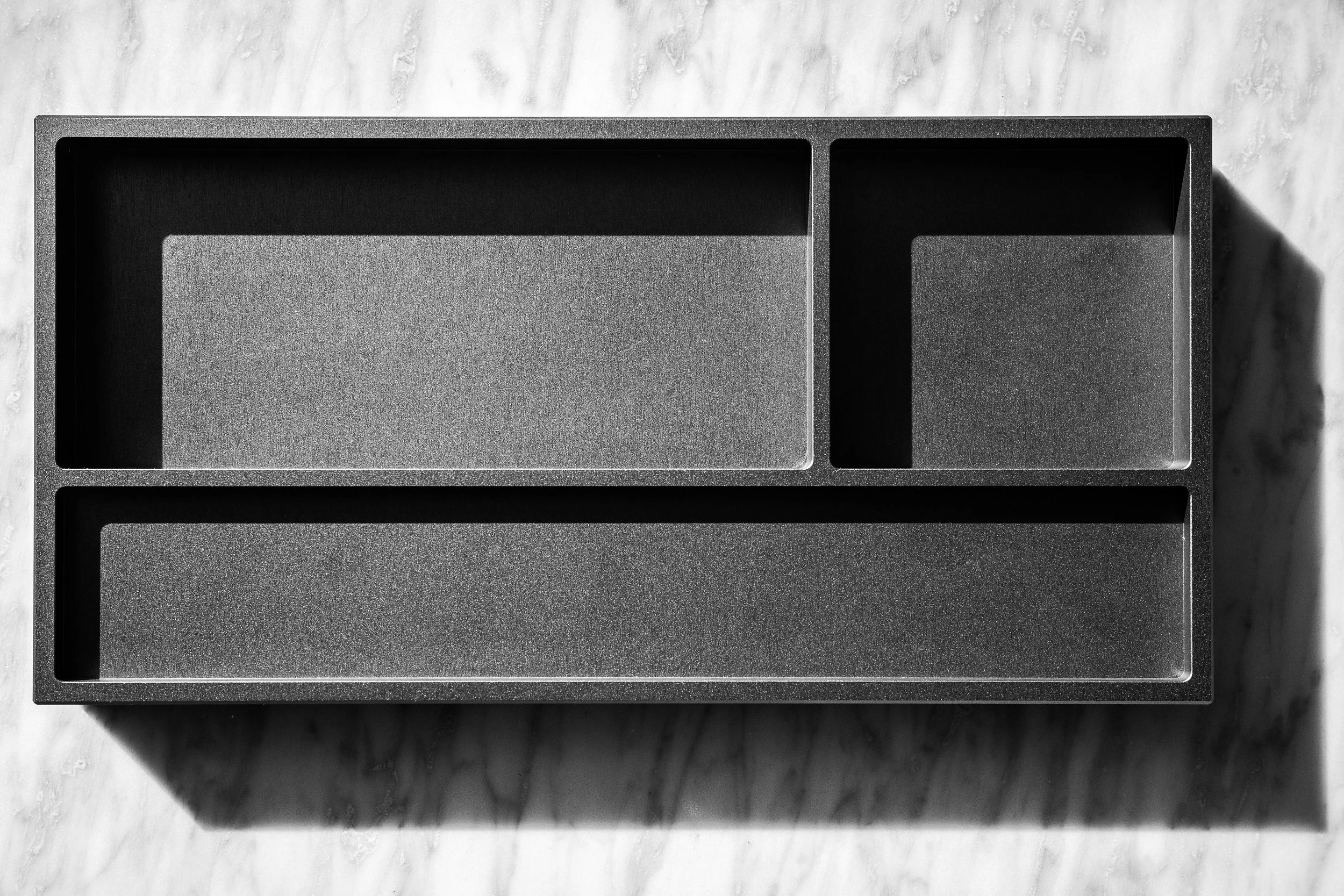
45-degrees chamfered edges
Most objects are understood first by outline, then by surface, and finally by detail. Edges sit between all three.
They define the form. They catch light. They shape how an object is handled, how it wears, and how precise it feels in use.
On a machined object, edges are rarely incidental. A sharp edge can feel abrupt or unfinished. A heavily rounded one can soften the geometry too much and make the object feel less exact. The right edge does something quieter: it resolves the transition between surfaces without calling too much attention to itself.
That matters both visually and physically.
A clean chamfer changes how light moves across a part. It gives planes a clearer boundary. It makes proportions read more deliberately. In the hand, it removes the harshness of a raw corner without erasing the form.
Edges also reveal discipline. They show whether a part was merely produced or actually considered. How they break, how they meet, how consistently they carry through a piece—these are small decisions, but they are often what separate a resolved object from one that only looks acceptable at a distance.
For COMMON TOL., edges are not decoration. They are part of the function of the form. They affect touch, durability, legibility, and the overall sense that an object has been finished properly.
That is why they matter.
Not because they ask to be noticed, but because the object feels different when they are right.
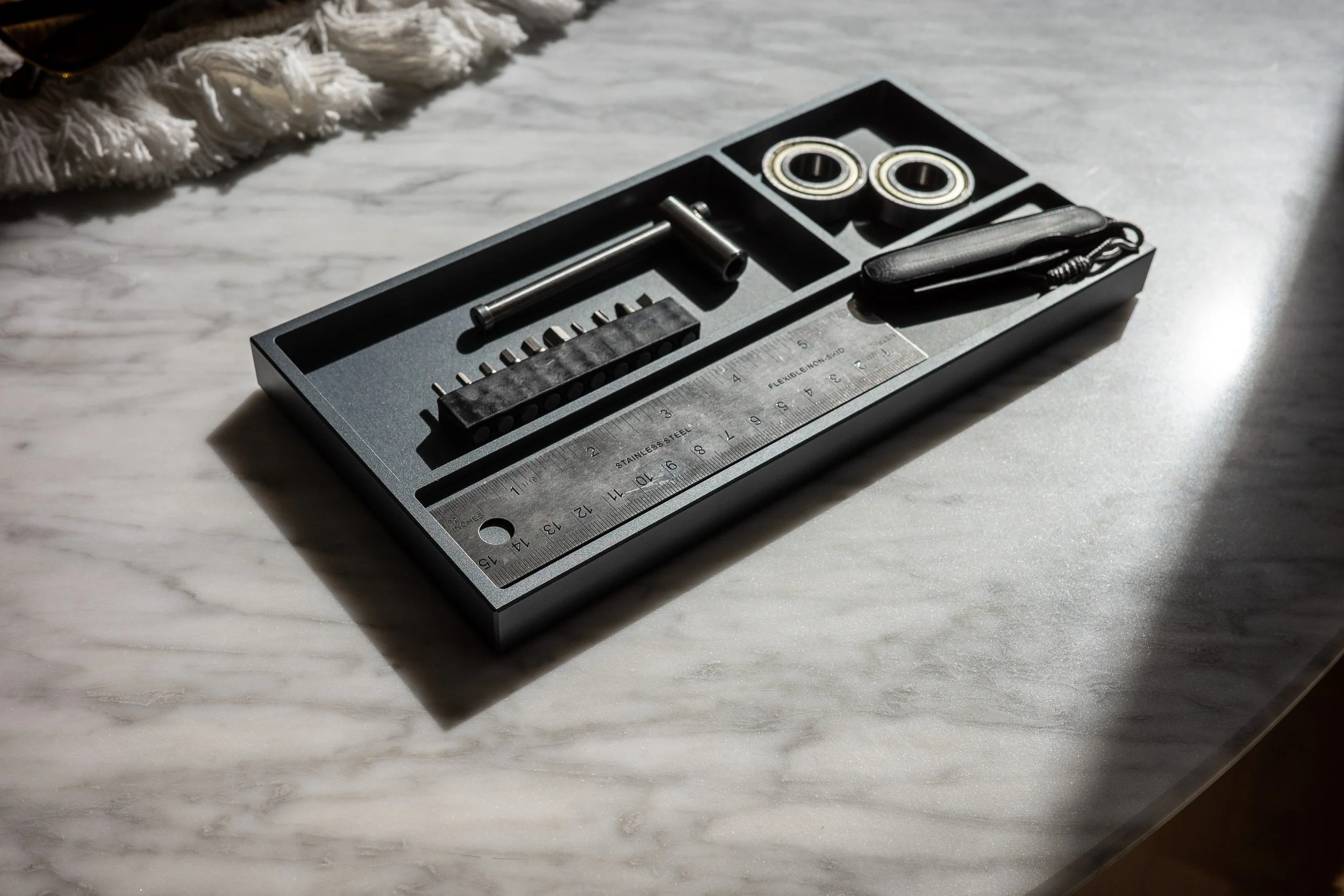
Type II Anodizing
Type II Anodizing
Aluminum is useful in its raw state, but unfinished metal rarely stays that way for long. It marks easily, shifts in appearance with use, and can feel incomplete.
Type II anodizing resolves that.
It is an electrochemical process that builds a controlled oxide layer on the surface of the aluminum. Not a coating laid over the part, but a finish grown from the material itself. The result is better corrosion resistance, a more durable surface, and a more deliberate final appearance.
For machined objects, that matters.
A well-made aluminum part already has the right things to say: mass, edge definition, flatness, proportion. The finish should support those qualities, not bury them. Type II anodizing does that well. It keeps the material legible while giving it more protection and a more uniform surface.
It is also honest. It does not disguise poor geometry or careless machining. If anything, it asks more of the part underneath. Surface prep, edge quality, and toolpath discipline all remain visible in the final result.
That is part of the appeal.
For COMMON TOL., Type II anodizing fits the same logic as the objects themselves: durable, restrained, and precise without calling attention to the process for its own sake. It lets aluminum remain aluminum, just more resolved.
Not decorative. Not excessive. Just finished properly.
Aluminum is useful in its raw state, but unfinished metal rarely stays that way for long. It marks easily, shifts in appearance with use, and can feel incomplete.
Type II anodizing resolves that.
It is an electrochemical process that builds a controlled oxide layer on the surface of the aluminum. Not a coating laid over the part, but a finish grown from the material itself. The result is better corrosion resistance, a more durable surface, and a more deliberate final appearance.
For machined objects, that matters.
A well-made aluminum part already has the right things to say: mass, edge definition, flatness, proportion. The finish should support those qualities, not bury them. Type II anodizing does that well. It keeps the material legible while giving it more protection and a more uniform surface.
It is also honest. It does not disguise poor geometry or careless machining. If anything, it asks more of the part underneath. Surface prep, edge quality, and toolpath discipline all remain visible in the final result.
That is part of the appeal.
For COMMON TOL., Type II anodizing fits the same logic as the objects themselves: durable, restrained, and precise without calling attention to the process for its own sake. It lets aluminum remain aluminum, just more resolved.
Not decorative. Not excessive. Just finished properly.